Buying Your First Watch
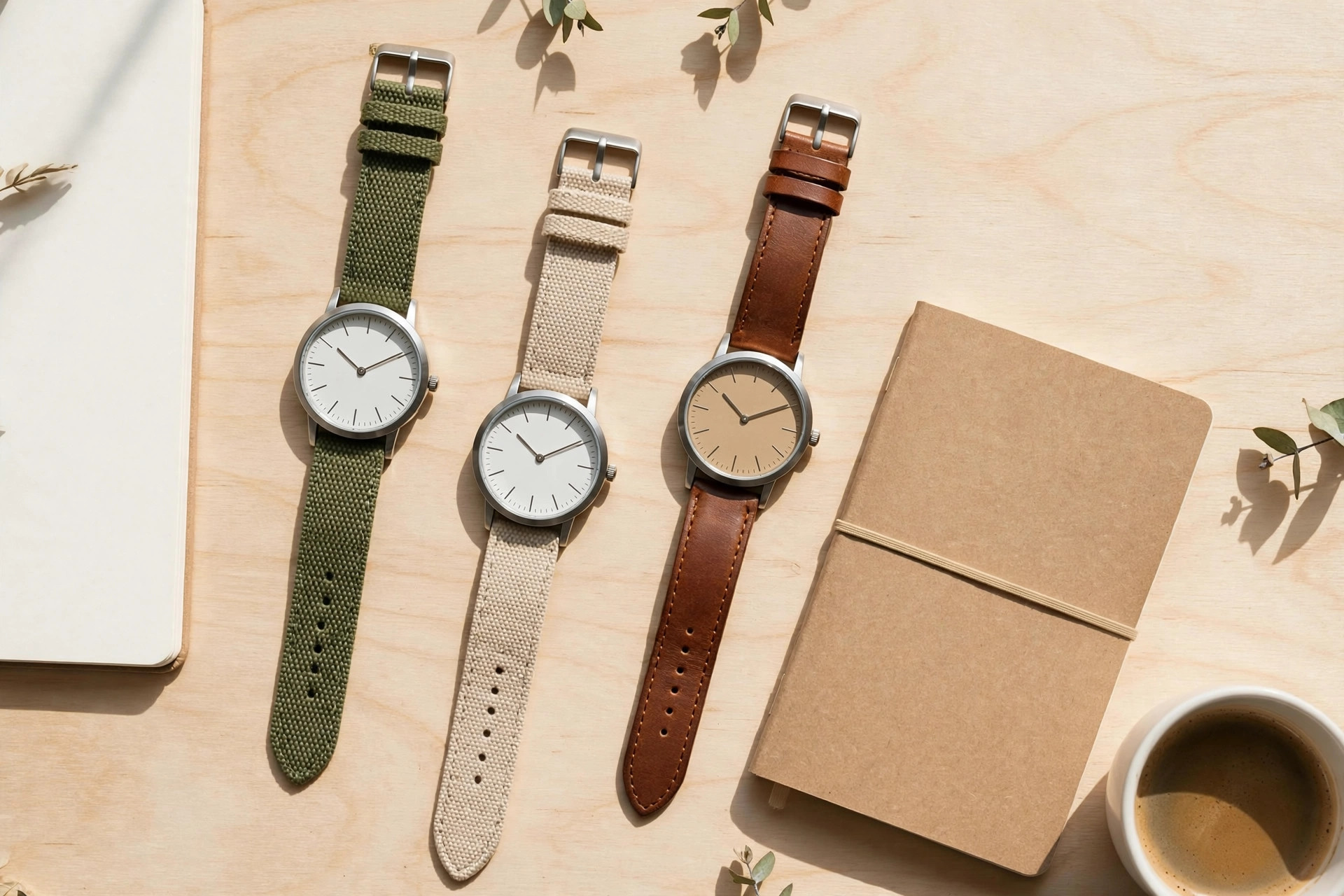
Buying your first proper watch is more fun than it should be — and slightly more confusing than it needs to be. This guide covers the five things that actually matter: fit, water resistance, where to buy, how to avoid fakes, and straps. Get these right and the rest is just taste.
1. Fit: measure your wrist, then check lug-to-lug
Case diameter (the "40mm" number) gets all the attention, but lug-to-lug distance — the length from one end of the case to the other — matters more for comfort. The lugs shouldn't overhang your wrist; if they do, the watch will look and feel too big regardless of the diameter.
How to measure
- Wrap a soft tape measure (or a strip of paper) snugly around your wrist just below the wrist bone. That's your wrist size — most adults land between 6 and 8 inches (150–205mm).
- When comparing watches, check the lug-to-lug spec. As a rough rule, it should be comfortably less than the flat width of the top of your wrist.
- Case thickness matters too: anything under ~12mm slides under a cuff; thick divers and chronographs often don't.
General starting points (not rules): wrists under ~6.5" tend to suit 34–38mm cases; 6.5–7.5" suits 38–42mm; above that, 40–44mm. But lug-to-lug and personal taste trump diameter every time — a 40mm watch with short lugs can wear smaller than a 38mm with long ones.
2. Water resistance ratings, honestly explained
Water resistance numbers are the most misunderstood specs in watches. Here's what the ratings practically mean:
| Rating | What it really means |
|---|---|
| 30m / 3 ATM | Rain, splashes, hand-washing. Not for swimming. |
| 50m / 5 ATM | Light swimming in practice, but manufacturers usually still advise against it. Treat as splash-proof plus. |
| 100m / 10 ATM | Swimming and snorkeling are fine. This is the first rating to trust in water. |
| 200m / 20 ATM | Serious water use, including recreational scuba. The "proper" dive-watch baseline. |
Three honest caveats: ratings are tested on new watches under lab conditions — gaskets age, so get seals checked every few years if you swim regularly. Hot water (showers, hot tubs) is harder on seals than cold water. And "water resistant" without a number means almost nothing.
3. Where to buy safely
You have three main channels, each with trade-offs:
- Authorized dealers (ADs) — official retailers for a brand. You pay closer to list price but get the full manufacturer warranty and zero authenticity risk. Best for: peace of mind, gifts, first big purchase.
- Reputable grey-market sellers — legitimate businesses selling genuine watches outside the official dealer network, usually at a discount. The watch is real; the warranty is typically the seller's own rather than the manufacturer's. Best for: saving money on mainstream models. Vet the seller: years in business, real reviews, clear return policy.
- Large general retailers — big online and department stores. Convenient, easy returns, competitive pricing on entry-level models. Just confirm the seller is the retailer itself (or a known partner), not an unknown marketplace third party.
Avoid: deals that are dramatically cheaper than everywhere else, sellers who won't show actual photos of the watch, and anyone pressuring you to pay by wire transfer or gift cards. If you're buying pre-owned, use platforms with authentication services or buy from established pre-owned dealers with return windows.
4. Spotting fakes: the basics
Counterfeits exist at every price point — even for $30 Casios. You don't need to become an expert, but these checks catch most fakes:
- Buy from reputable sellers. This single step eliminates the vast majority of fake risk.
- Check the details. Misaligned dial printing, sloppy date windows, wrong fonts, and cheap-feeling clasps are classic tells. Compare against official product photos.
- Weight and finishing. Fakes often feel too light and have rough edges where the genuine watch is crisp.
- Movement behavior. A fake "automatic" with a ticking quartz seconds hand is an instant giveaway.
- Box and papers. Genuine watches come with proper packaging, manuals, and warranty cards. Missing or photocopied paperwork is a red flag.
- Serial numbers. On many brands you can verify serials with the manufacturer or an authorized dealer.
When in doubt, enthusiast forums are full of people who'll authenticate from photos — and if a deal feels too good to be true, it is.
5. Straps and bracelets: the basics
The strap is the cheapest way to change a watch's personality. What to know:
- Lug width (18mm, 20mm, 22mm…) determines which straps fit. It's listed in the specs — match it.
- Metal bracelets are durable and dress up or down; they're also the most expensive to replace.
- Leather straps dress a watch up but don't love water or sweat. Good for office and evenings.
- Rubber/silicone is the choice for water and sport.
- NATO/nylon straps are cheap, washable, and fun — and if one spring bar fails, the watch stays on your wrist.
- Spring bars are the tiny pins holding the strap on. A $10 spring-bar tool and five minutes of patience let you swap straps yourself; there are countless video tutorials.
Where to buy
Start with authorized dealers or large reputable retailers for your first watch — the full warranty and easy returns are worth it while you're learning what you like. Compare live prices across a couple of sellers before you commit. When you're ready:
Buying through our links may earn us a commission at no cost to you. See our full disclosure.
Ready to pick a watch? Browse the best watches under $200 or under $500. Still torn on movement type? Read quartz vs automatic.